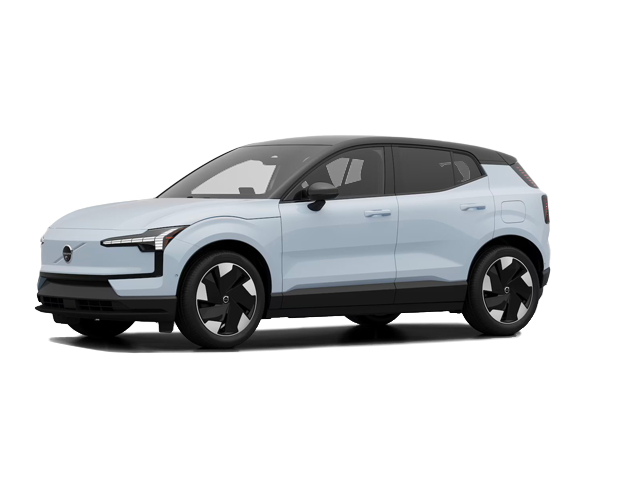
Photo for illustrative purposes only.
Find out moreVolvo Laval

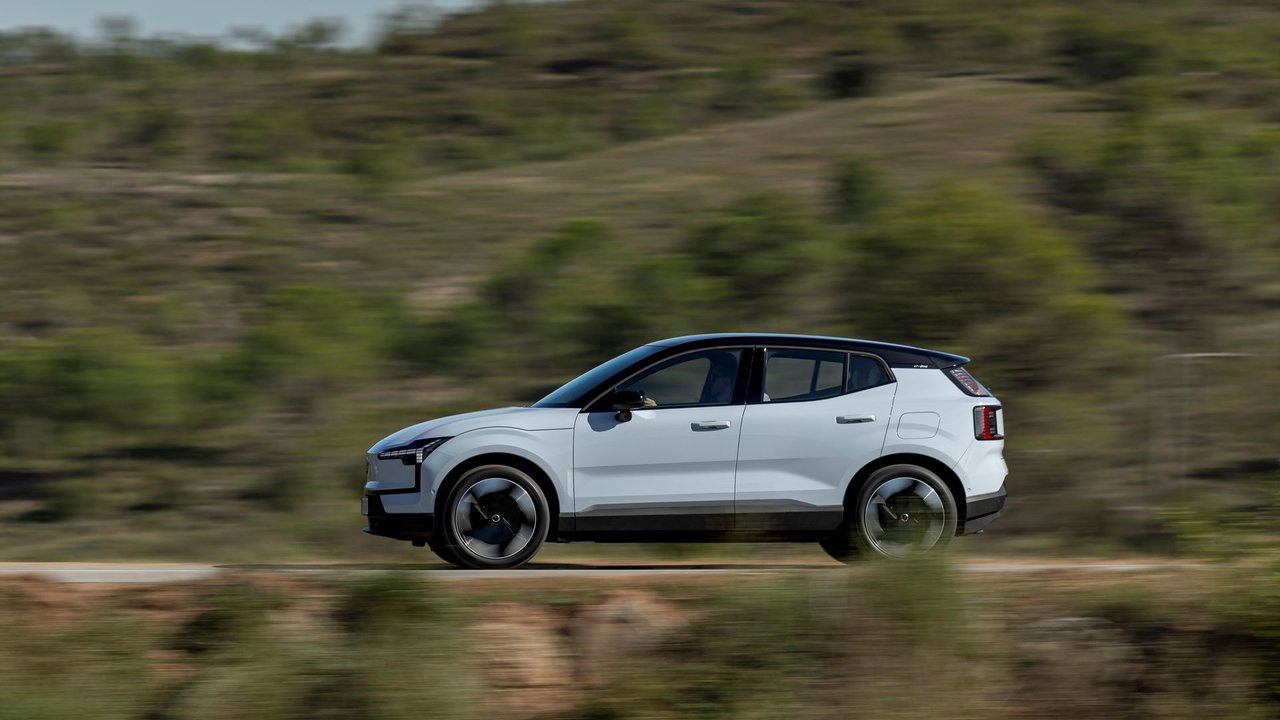
Choosing an EX30 comes down to more than trim level. It also means picking a drivetrain, and that decision shapes how the car feels every day, across all the driving conditions Quebec roads bring throughout the year. One setup favours range and simplicity. The other adds traction and quicker response.
This guide breaks down what actually changes between the two, and which trims give you access to each.
|
Feature |
Core |
Plus |
Ultra |
|
Single Motor Extended Range |
Available |
Available |
Available |
|
Twin Motor Performance (AWD) |
Unavailable |
Optional |
Optional |
|
Two-zone climate system |
Unavailable |
Available |
Available |
|
Harman Kardon Premium Sound |
Unavailable |
Available |
Available |
|
Panoramic roof, fixed |
Unavailable |
Available |
Available |
|
Park Pilot Assist / 360° camera |
Unavailable |
Unavailable |
Available |
|
Pilot Assist |
Unavailable |
Unavailable |
Available |
The drivetrain split is straightforward: Core ships with the Single Motor Extended Range setup only. Plus and Ultra open the door to Twin Motor Performance as an option, so the all-wheel-drive layout is tied to the two higher trims rather than being a lineup-wide choice.
The Single Motor Extended Range configuration is the efficiency-focused setup, and it is also the only one available without upgrading trims. It is rear-wheel drive, built around getting the most distance out of a charge, and it carries an electric range of up to 475 km.
For a driver who mostly deals with commuting, errands, and predictable city and highway routes, that combination of simplicity and range covers the job without asking for anything extra. There is no AWD hardware to think about, no added weight from a second motor, just one drivetrain doing one thing well.
Twin Motor Performance changes the equation by adding a second motor and all-wheel drive. That means power goes to all four wheels, which matters when a Quebec winter turns a normal on-ramp into a test of grip. It also sharpens throttle response, since torque can be managed independently between the front and rear axles.
The trade-off is that Twin Motor Performance is only available once you step up to Plus or Ultra. You are not just paying for AWD, you are buying into the equipment tier that comes with it, including a two-zone climate system and Harman Kardon Premium Sound that Core does not offer.

The drivetrain decision does not happen in isolation. Core includes Advanced Sensing Technology and Google Assistant, Google Maps, and Google Play Store as standard, along with a 12.3-inch centre display and wireless Apple CarPlay and Android Auto. It is a fully equipped starting point, not a stripped-down one.
Moving to Plus adds a panoramic fixed roof, adaptive cruise control, a power tailgate, and higher-level interior illumination. Ultra builds further with Park Pilot Assist, a 360-degree camera with 3D view, and Pilot Assist, none of which are available on Core or Plus.
A few conveniences flip the other way. Core is the only trim with front USB-C ports paired with the High Performance audio system and a one-zone climate system, while Plus and Ultra swap in front and rear USB-C ports, Harman Kardon sound, and two-zone climate. Neither layout is objectively better, they simply serve different priorities.
So the choice between Single Motor Extended Range and Twin Motor Performance also becomes a choice about which comfort and convenience features you want alongside it, since Twin Motor Performance is unavailable on Core regardless of preference.
If your daily routine is mostly predictable, paved roads, and you want to stretch a charge as far as possible, the Single Motor Extended Range setup on Core, Plus, or Ultra gives you that range without extra complexity or cost tied to a second motor.
If winter driving confidence and quicker response matter more to you than squeezing out maximum range, Twin Motor Performance on Plus or Ultra puts power to all four wheels and pairs that with the climate and audio upgrades those trims already include.
Neither path is a downgrade. One is built around efficiency and straightforward commuting, the other around traction and a sharper drive. The right one depends on how you actually use the car through a Quebec year, not on which one sounds more capable on paper.
The 2026 EX30 offers two distinct ways to drive electric, one tuned for range and simplicity, the other for all-wheel traction and quicker response. The trim you pick determines which drivetrain choices are on the table.
Visit Volvo Laval in Laval to compare the Single Motor Extended Range and Twin Motor Performance setups side by side. Ask about a test route that covers both city streets and faster roads, so you can feel the difference in traction and response yourself, and confirm which trim and drivetrain combination matches your daily routine.
Photo for illustrative purposes only.
Find out more
City Safety Automatic Braking Explained for the 2026 Volvo XC60
Most fender-benders happen at speeds so low they barely register, a car creeping into a stopped line of traffic, a shopping cart lane in a busy...
Read more
Seven-Seat Configuration Explained for the 2026 Volvo XC90 Across Every Trim
Shopping for a three-row SUV in Quebec often comes down to one question: how many people can you actually fit, and how comfortably? The 2026 Volvo...
Read more
The 2026 XC60 Polestar Engineered Merges Power With Electric Range
A plug-in hybrid SUV that can also feel sharp behind the wheel is not the easiest thing to build. The XC60 Polestar Engineered is Volvo’s answer,...
Read morePowered and developed by
