City Safety Automatic Braking Explained for the 2026 Volvo XC60
Most fender-benders happen at speeds so low they barely register, a car creeping into a stopped line of traffic, a shopping cart lane in a busy...
Read moreVolvo Laval

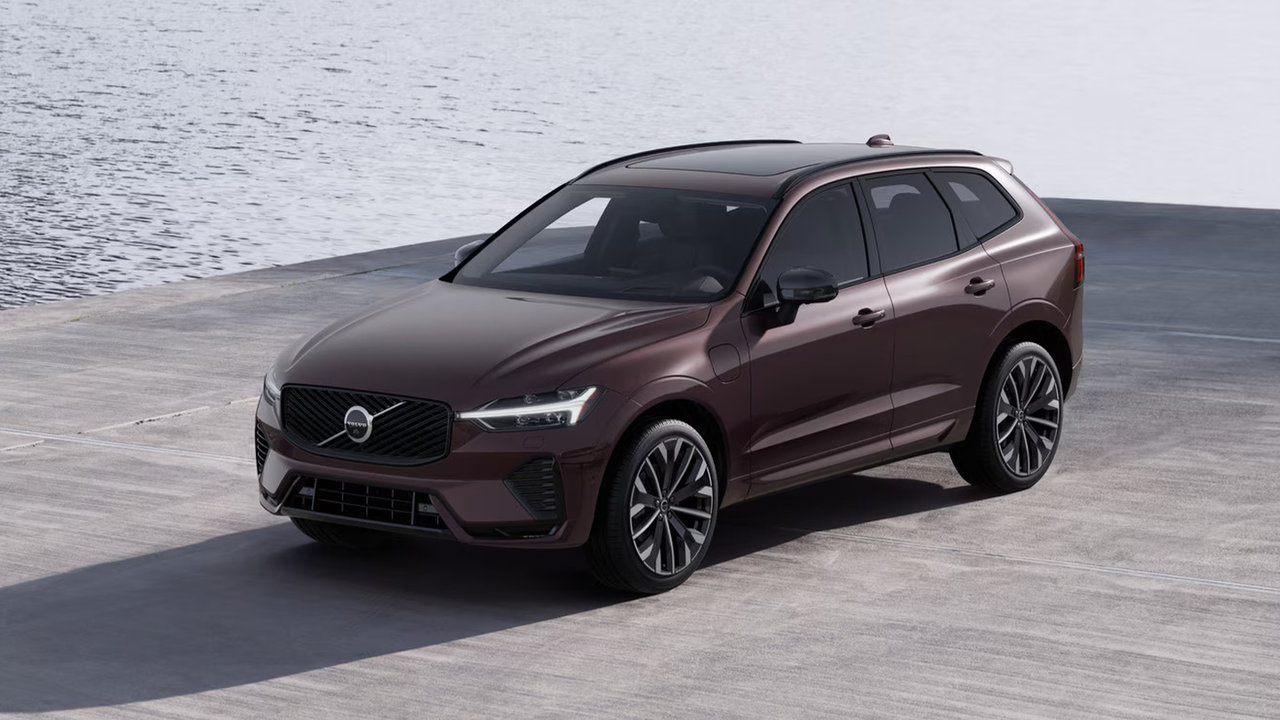
A plug-in hybrid promises electric driving with a gas engine standing by, but the real question is simpler: will it actually cover your commute without burning fuel? For a Quebec driver eyeing the XC60 T8, that answer depends less on the spec sheet and more on the route, the season, and the charging habit behind the wheel.
This FAQ walks through what the T8’s electric range means day to day, when the gas engine steps in, and who this powertrain genuinely fits.
The XC60 T8 is rated for 58 km of electric-only driving. That figure comes from an 18.8 kWh battery pack (14.7 kWh usable) paired with a 143 hp electric motor working alongside the 312 hp turbocharged 2.0L four-cylinder engine.
Combined, the gas and electric sides produce 455 hp and 523 lb-ft of torque, with AWD and an 8-speed automatic transmission putting that power down. It’s a genuinely quick SUV, hitting 100 km/h in 4.8 seconds, but the electric range is the number that decides whether daily driving uses any gas at all.
58 km is a round trip, not a one-way distance. A commuter driving 25 to 29 km each way, door to door, sits right at the edge of what a full charge covers before the engine needs to contribute.
When the battery has charge, the T8 defaults to electric propulsion, drawing on the 143 hp motor and its 228 lb-ft of torque. The gas engine stays off unless you demand more power than the motor alone can deliver, such as a hard highway merge.
Once the usable 14.7 kWh is depleted, the T8 shifts to hybrid-assisted driving: the 312 hp engine and electric motor work together, and the vehicle behaves like a conventional hybrid rather than a plug-in. Combined fuel economy in that mode is rated at 8.5 L/100 km.
The difference matters for planning. A commute that starts on a full charge and stays inside 58 km can be gas-free start to finish. A longer trip, or one that starts with a partially depleted battery, will use both power sources.
Stop-and-go city driving is where a plug-in hybrid does its best work. Frequent braking and lower speeds let the electric motor handle most of the load, and regenerative braking helps recover some charge along the way.
Highway-heavy commuting changes the outcome. Sustained higher speeds draw down the battery faster than city driving does, and repeated hard acceleration, merging onto a highway or passing traffic, pulls in the gas engine more often even before the battery is empty.
A commuter whose route is mostly arterial roads and lower-speed traffic will generally get closer to the full 58 km than one whose route is mostly highway.
A round trip comfortably under 58 km, with room to spare for detours, errands, or a cold start, is where a driver is most likely to finish the day without the engine firing. Push past that distance regularly, and the T8 settles into hybrid mode for at least part of every drive.
Quebec winters add a variable here. Cold temperatures reduce battery efficiency, and cabin heating draws on the same battery reserve that would otherwise go toward propulsion. A commute that stays fully electric in mild weather may need engine assistance on a cold morning.

Overnight home charging is the simplest way to start each day with a full battery. Charging times run 5.0 hours on a 16A circuit, 7.0 hours on 10A, or up to 12 hours on a 6A circuit, all of which fit comfortably into an overnight window.
Routine charging, plugging in every night, is what makes the 58 km figure relevant to daily driving. Occasional or inconsistent charging means starting more trips with a partially depleted or empty battery, pushing more of the drive into hybrid mode and raising fuel use over the course of a week.
Yes. The T8 seats five and carries the plug-in hardware without giving up daily-use flexibility. Cargo space runs 468 L behind the rear seats and 950 L with them folded, enough for school-run gear, groceries, and weekend errands.
The tradeoff for the battery pack shows up mainly in small numbers next to the gas-only B5 AWD: slightly less cargo room (950 L versus 965 L folded), a touch less ground clearance (200 mm versus 209 mm), and a heavier curb weight (2,120 kg versus 1,883 kg). None of it changes what the SUV is built to do.
|
Question |
Short Answer |
|
Electric-only range |
58 km |
|
Best commute length for gas-free days |
Comfortably under 58 km round trip |
|
Best driving pattern for electric mode |
Lower-speed, stop-and-go routes |
|
Charging time (16A / 10A / 6A) |
5.0 / 7.0 / 12 hours |
|
Combined power |
455 hp, 523 lb-ft |
|
Seating / cargo |
5 seats, 468 L to 950 L cargo |
The ideal T8 owner has a predictable commute and a place to plug in every night, whether that’s a garage outlet or a dedicated home charger. For that driver, most weekday driving can happen without using the gas tank at all.
A long-distance commuter, or someone without consistent charging access, will spend more time in hybrid mode and see less benefit from the battery. In that case, the T8’s 8.5 L/100 km combined rating in hybrid mode is still competitive, but the electric-first value proposition weakens.
The XC60 T8 is built for drivers who want electric-first commuting with a gas engine as backup, not a full-time electric-only experience. Matching your actual commute to that 58 km figure is the honest way to decide.
The XC60 T8 pairs a 58 km electric range with a five-seat SUV that still handles the demands of daily family driving. How much of that range translates into gas-free days depends on your route, your charging routine, and the season.
Visit Volvo Laval in Laval to talk through your commute, confirm current trim details, and see how the T8’s charging setup fits your driveway. Book a commute-fit consultation or test drive to find out firsthand.
City Safety Automatic Braking Explained for the 2026 Volvo XC60
Most fender-benders happen at speeds so low they barely register, a car creeping into a stopped line of traffic, a shopping cart lane in a busy...
Read more
Seven-Seat Configuration Explained for the 2026 Volvo XC90 Across Every Trim
Shopping for a three-row SUV in Quebec often comes down to one question: how many people can you actually fit, and how comfortably? The 2026 Volvo...
Read more
Single Motor Extended Range or Twin Motor Performance: Which 2026 Volvo EX30 AWD Setup Fits Your Driving?
Choosing an EX30 comes down to more than trim level. It also means picking a drivetrain, and that decision shapes how the car feels every day,...
Read morePowered and developed by
